适用范围
- 优点:
- 当一个子组件出现时,必定与其父组件一同出现
- 页面与URL绑定时
- 易于跳转
- 特点:
- 匹配一个子路由, 会自动匹配其父路由
- 实例
- 匹配一个子路由, 会自动匹配其父路由
- 缺点
- 组件间的父子关系独立于组件外部,由路由定义的
- 逻辑分离,容易出错
- 组件间的父子关系独立于组件外部,由路由定义的
实例
路由定义
import { createRouter, createWebHistory } from "vue-router";
const router = createRouter({
	history: createWebHistory(),
	routes: [
		{
			path: '/', component: () => import('@/components/home-route.vue'), children: [
				{
					path: 'a', component: () => import('@/components/a-route.vue'), children: [
						{ path: 'b', component: () => import('@/components/b-route.vue') },
					]
				}
			]
		}
	]
})
export default router
路由组件定义
home:
<template>
  <p>Home Route</p>
  <router-view />
</template>
a:
<template>
  <router-view></router-view>
</template>
b:
<template>
  <p>I' m b-route</p>
</template>
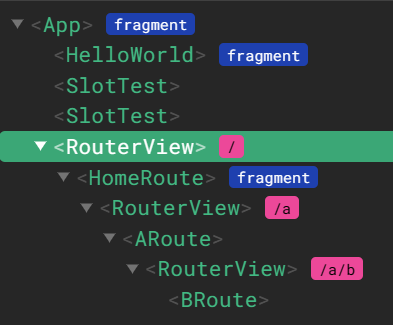
效果图
当路径为localhost:5137/a/b时